Whisking Up Wellness: Exploring Matcha Whisk Culture
Nghia Tran
January 23, 2026 • 6 min read
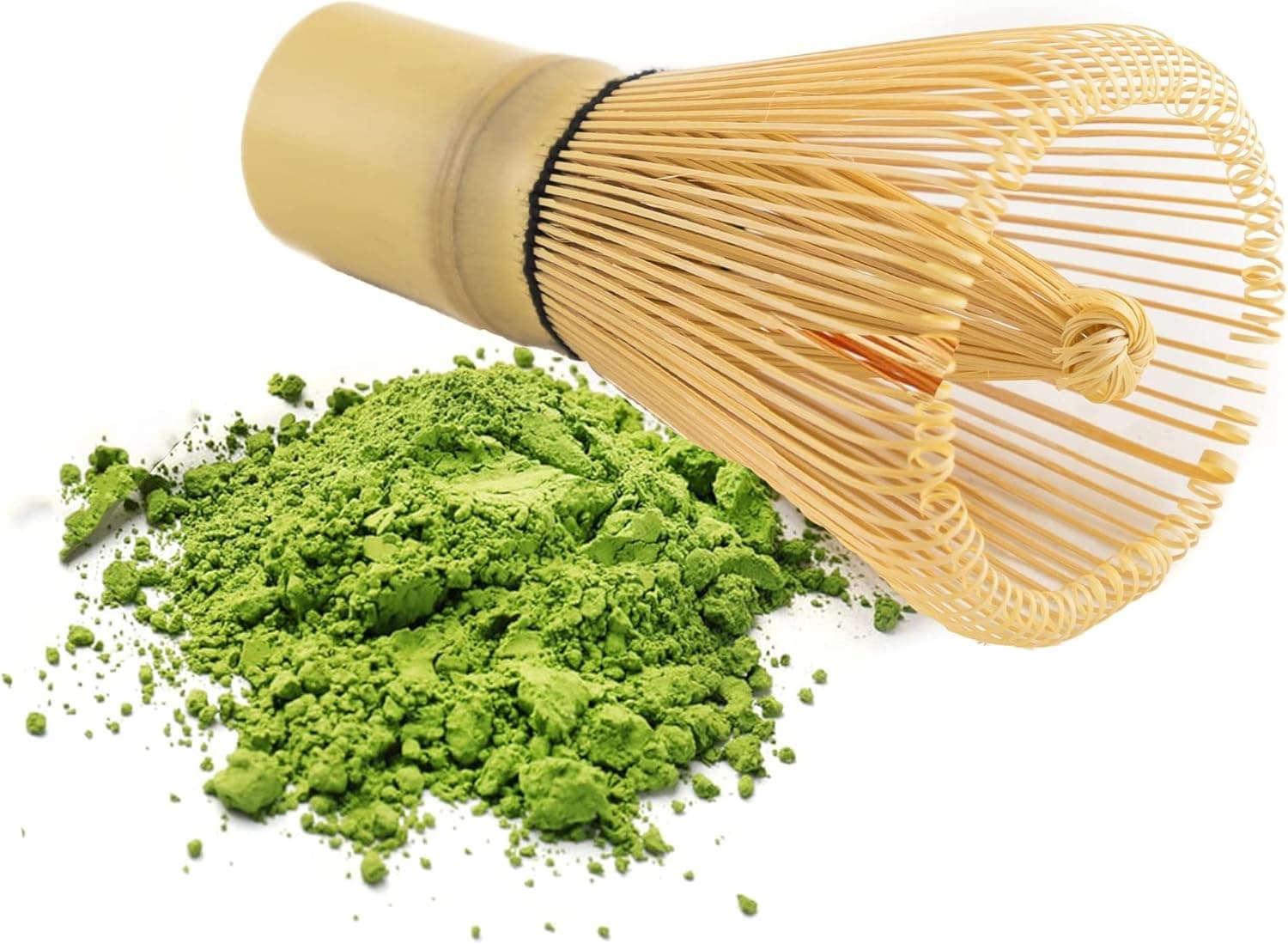
- Matcha whisks (chasen) are central to both the traditional and modern production of matcha tea, influencing beverage quality through material and design variations.
- The manufacture of matcha whisks exemplifies a fusion of artisanal craftsmanship with evolving industrial techniques, balancing precision and scalability.
- Scientific research underscores the role of whisking parameters in optimizing the suspension and bioavailability of matcha's active compounds.
- The global cultural proliferation of matcha has catalyzed innovation in whisk design, promoting wellness trends and functional beverage development.
- Standardizing matcha whisk evaluation metrics contributes to quality assurance and potential regulatory frameworks in the expanding green tea market.
Matcha, a finely ground powder derived from specially cultivated green tea leaves, has attained global prominence beyond its Japanese ceremonial origins. Integral to its preparation is the matcha whisk, traditionally known as the chasen, a tool whose material composition, structural design, and manufacturing methodology directly affect both the sensory attributes and the health-related efficacy of prepared beverages. This editorial explores the multifaceted dimensions of matcha whisk culture by examining its historical and contemporary relevance, technological fabrication methods, the scientific basis of its functional performance, and the global industry dynamics shaping its evolution.
The Historical and Cultural Context of the Matcha Whisk
Origins and Traditional Craftsmanship
The chasen emerged during Japan's Muromachi period (1336–1573), concomitant with the formalization of the tea ceremony (chanoyu). Traditionally crafted from the sensitive branches of the Sasa bamboo species, these whisks are meticulously hand-carved to yield a finely furcated tip capable of aerating matcha powder in water efficiently. The artisan's expertise is paramount: blade flexibility, tine uniformity, and grip ergonomics are all calibrated to optimize froth formation and ensure consistent dissolution of matcha particles without compromising leaf integrity.
Contemporary Cultural Adaptations
With matcha's expansion from Japanese ceremonial use into international wellness and gastronomy sectors, the design and utilization of the whisk have undergone reinterpretation. Emerging contexts prioritize not only aesthetic appreciation but also functional versatility, emphasizing ease of use, hygiene considerations, and compatibility with alternative liquids. These contemporary cultural adaptations have spurred innovation in both form and materials, incorporating synthetic fibers and ergonomic enhancements while still respecting traditional paradigms.
Material Science and Manufacturing Techniques
Material Properties and Selection
The intrinsic properties of bamboo—lightweight, tensile strength, and natural elasticity—render it ideal for whisk construction. However, the grade and harvest conditions of bamboo significantly affect its performance. Seasoned bamboo with controlled moisture content prevents warping and microbial degradation. Additionally, the choice between natural and synthetic fibers impacts durability, cleaning protocols, and user experience. Synthetic variants, typically composed of food-grade polymers, offer consistent uniformity and resistance to breakage but may affect the tactile feedback critical for traditional preparation.
Artisanal versus Industrial Production
Crafting a matcha whisk involves a sequence of precise steps including stalk selection, splitting, etching, and hand-shaping, traditionally executed by artisans. Industrial production attempts to scale this through mechanized splitting and laser cutting to achieve high volume output with minimal variance. Nonetheless, fully automated methods face challenges replicating the nuanced flexibility and resilience endowed by hand processes. The industry adopts hybrid approaches that combine machine precision for initial shaping with manual finishing to preserve functional quality.
Scientific Evaluation of Whisk Performance
Whisking Dynamics and Matcha Suspension
From a fluid dynamics perspective, the action of whisking disperses matcha powder particles uniformly in water, creating a colloidal suspension critical for palatability and nutrient bioavailability. Parameters such as whisk tine number, diameter, and oscillation frequency influence particle distribution and creaming stability. Empirical studies employing high-speed videography and rheological measurements have established correlations between whisk design and optimal matcha dispersion, highlighting the importance of aeration in enhancing the beverage's organoleptic characteristics.
Bioavailability and Nutritional Implications
The preparation method directly modulates the bioactive compound availability within matcha, including catechins, caffeine, and theanine. Efficient whisking increases surface area contact with water and facilitates nanoparticle formation, thus improving gastrointestinal absorption rates. Controlled experiments confirm that well-aerated matcha exhibits higher plasma concentrations of epigallocatechin gallate (EGCG), a potent antioxidant, supporting the role of whisking technique in maximizing therapeutic benefits associated with matcha consumption.
Global Industry Trends and Future Directions
Market Expansion and Technological Innovation
The burgeoning global demand for matcha as a functional beverage has incentivized product diversification, including electric whisks and hybrid tools integrating temperature regulation. Markets in North America and Europe show increasing consumer preference for easy-to-clean materials and multipurpose instruments that transcend traditional ceremonial use. Digital platforms facilitating artisanal product dissemination are altering production-consumption dynamics, bridging heritage craftsmanship with contemporary wellness paradigms.
Standardization and Quality Assurance
In the absence of formalized industry standards for matcha whisk quality, disparities in performance and usability persist, complicating consumer choice and trade regulation. Emerging frameworks advocate for metrics such as tine resilience, moisture content tolerance, and microbial safety. Innovations in sensor technologies and material testing apparatus promise to establish benchmark criteria, enhancing both product reliability and educational dissemination regarding optimal preparation practices.
Expert Analysis & FAQ
Q1: How does the design of the matcha whisk influence the chemical properties of the prepared tea?
The design of a matcha whisk affects the agitation and dispersion of powder particles within the solvent medium. A whisk with a greater number of finely spaced tines improves suspensory homogeneity, promoting maximal extraction and stabilization of polyphenols such as EGCG and caffeine. This optimized mechanical action prevents clumping, increases surface exposure, and thereby enhances the biochemical availability of antioxidants and amino acids integral to matcha's health profile.
Q2: What advancements have been made in synthetic materials for matcha whisks, and do they affect the traditional matcha experience?
Synthetic materials like food-grade nylon and flexible polymers now provide alternatives to bamboo, offering improved durability, resistance to moisture-related degradation, and simplified sanitization. However, these materials alter the tactile feedback and the subtle flexibility intrinsic to bamboo, potentially affecting froth texture and sensory perception. While synthetic whisks are advantageous for casual or commercial settings, traditionalists argue that they lack the nuanced responsiveness necessary for ceremonial precision.
Q3: Can automated manufacturing replicate the quality of hand-crafted matcha whisks, and what challenges persist?
Automated manufacturing has succeeded in standardizing dimensions and throughput but struggles with replicating the delicate micro-architecture of bamboo tines, which confer optimal flexural properties. Challenges include maintaining tine elasticity, preventing brittleness, and capturing ergonomic nuances essential for user comfort. Consequently, industry practice often involves mechanization of initial shaping followed by artisanal finishing, preserving functional integrity while enhancing scalability.
Q4: How does matcha whisking technique affect the bioavailability and antioxidant activity of the tea?
Whisking technique modulates the colloidal stability and particle size distribution within the tea suspension. Vigorous, consistent whisking facilitates nanoparticulate dispersion, increasing the surface area exposed for absorption in the gastrointestinal tract. This enhanced dispersion correlates with elevated plasma levels of antioxidants such as EGCG post-consumption. Inadequate whisking results in particle agglomeration, limiting bioactive compound availability and potentially diminishing the health-promoting effects attributed to matcha.


